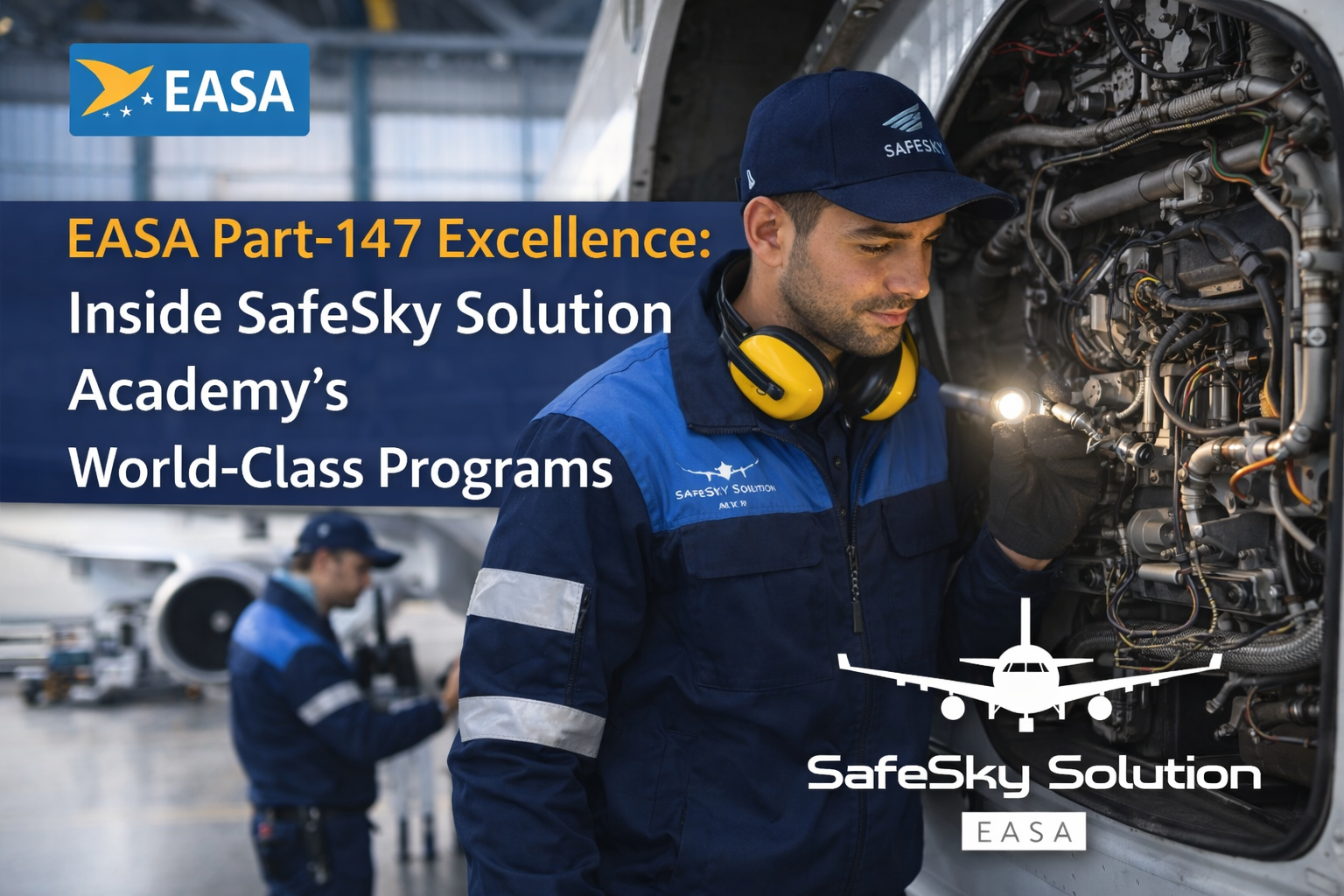
The global aviation industry continues to expand, driving strong demand for EASA Part-147 approved training organizations delivering aircraft type rating courses. As airlines grow their fleets and introduce next-generation aircraft, licensed aircraft engineers must stay current through specialized training programs.
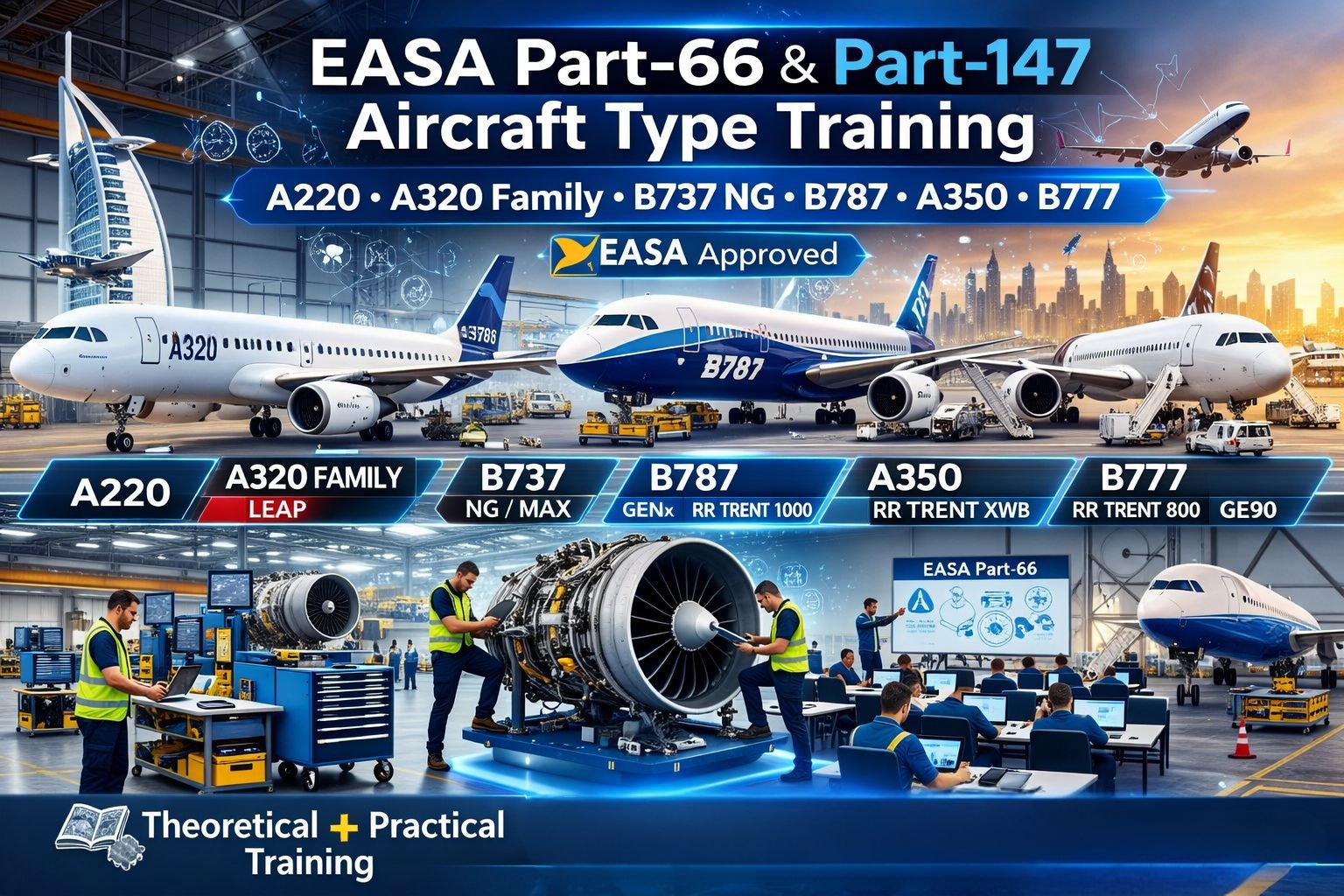
From the A220 and A320 Family to the B737 NG, Boeing 787 both engine programs, Airbus A350, and Boeing 777 training in the UAE, aircraft type courses are essential for career progression and regulatory compliance.
This article explores the latest aircraft type training demand, EASA Part-66 examination structure updates, and the most in-demand programs worldwide.
Understanding EASA Part-147 Approved Training Organizations
EASA Part-147 approved training organizations are authorized institutions that provide aircraft type training and conduct theoretical examinations in accordance with European Union Aviation Safety Agency regulations.
These organizations deliver:
-
Aircraft type theoretical courses
-
Practical training programs
-
On-the-Job Training (OJT)
-
EASA Part-66 examinations
-
Engine-specific aircraft programs
Training under Part-147 ensures engineers meet the certification standards required for license endorsement under EASA Part-66.
EASA Part-66 Examination Structure Updates
Recent EASA Part-66 examination structure updates reflect advancements in aircraft systems, composite materials, and modern engine technologies.
Key elements include:
-
Competency-based assessments
-
Modular examination structure
-
Enhanced practical evaluation standards
-
Alignment with advanced aircraft such as A350 and B787
Engineers must complete:
-
Module examinations
-
Type course theoretical examinations
-
Practical training assessments
These updates ensure engineers are fully prepared to maintain next-generation aircraft safely and efficiently.
Latest Aircraft Type Training Demand (A320, B787, A350, B777)
Airline fleet expansion has created strong demand for specific aircraft type ratings.
Airbus A320 Family Training
The A320 Family remains the most in-demand narrow-body aircraft worldwide.
Engine options include:
-
CFM56
-
V2500
-
LEAP-1A
-
PW Only
Popular programs include:
-
A320 – CFM56 + V2500
-
A320 – CFM56 + V2500 + LEAP
-
A320 – All Engines (CFM56 + V2500 + LEAP-1A + PW)
-
Airbus A320 LEAP
With many airlines transitioning to fuel-efficient fleets, A320 LEAP training continues to grow rapidly.
Boeing 787 Both Engine Programs
The Boeing 787-8/9/10 is powered by:
-
GEnx
-
RR Trent 1000
Many engineers complete B787 – GEnx + RR Trent 1000 combined programs to maximize employment opportunities.
B787 training demand is particularly strong in long-haul markets across the Middle East, Europe, and Asia.
Airbus A350 Training
The Airbus A350 powered by RR Trent XWB represents advanced composite airframe technology and modern avionics systems.
As global carriers expand long-haul routes, A350 type training demand continues to increase significantly.
Boeing 777 Training
The Boeing 777-200/300 remains one of the most widely operated wide-body aircraft globally.
Engine options include:
-
GE90
-
RR Trent 800
Demand for Boeing 777 training UAE programs is especially high due to the region’s large wide-body fleets and cargo operations.
Boeing 777 Training in the UAE
The UAE is a major aviation hub, making Boeing 777 training in the UAE highly sought after.
Benefits include:
-
Access to major airline fleets
-
Modern MRO facilities
-
Wide-body practical exposure
-
International regulatory recognition
Popular programs:
-
Boeing 777-200/300 (RR Trent 800)
-
Boeing 777 GE90
-
Practical training modules
-
Theoretical examinations
A220, A320 Family, B737 NG, B787 Both Engine Programs
Leading EASA Part-147 organizations offer comprehensive aircraft portfolios.
ATR 42 / 72
-
PW127 XT
-
PW127N
Airbus A220
-
New-generation regional jet program
Airbus A320 Family
-
CFM56
-
V2500
-
LEAP-1A
-
PW Only
Airbus A350
-
RR Trent XWB
Boeing 737 NG
-
CFM56 (NG)
Boeing 737 MAX
-
LEAP-1B (MAX)
Boeing 777
-
GE90
-
RR Trent 800
Boeing 787
-
GEnx
-
RR Trent 1000
These structured programs provide engineers with flexibility across multiple fleets and engine combinations.
Practical Training and Theoretical Examinations
Aircraft type training includes two core components:
Theoretical Phase
-
Aircraft systems
-
Limitations
-
Maintenance practices
-
Troubleshooting
-
Human factors
Practical Training Phase
-
Aircraft inspections
-
Component replacement
-
Engine ground handling
-
System functional checks
Successful completion allows aircraft type endorsement under EASA Part-66.
Boeing 747 and Legacy Wide-Body Programs
Although newer aircraft dominate demand, Boeing 747 training remains relevant for cargo operations and specialized fleets.
Engineers certified on legacy wide-body aircraft continue to find opportunities in freight and charter sectors.
Why Aircraft Type Courses Are Critical in 2026
With increasing global air traffic and fleet modernization, engineers certified on:
-
A220
-
A320 Family
-
B737 NG
-
Boeing 787 both engine programs
-
Airbus A350
-
Boeing 777
are positioned for long-term career growth.
Engine specialization in LEAP, GEnx, Trent 1000, Trent 800, GE90, and Trent XWB significantly enhances employability.
Conclusion
The aviation maintenance sector continues to evolve, and demand for EASA Part-147 approved training organizations remains strong worldwide. With rising fleet numbers of A320, B787, A350, and Boeing 777 aircraft, engineers must invest in advanced type courses and practical training programs.
Whether pursuing Boeing 777 training in the UAE, enrolling in A220, A320 Family, B737 NG, or B787 both engine programs, or completing updated EASA Part-66 examinations, specialized training is the foundation of a successful aviation maintenance career.