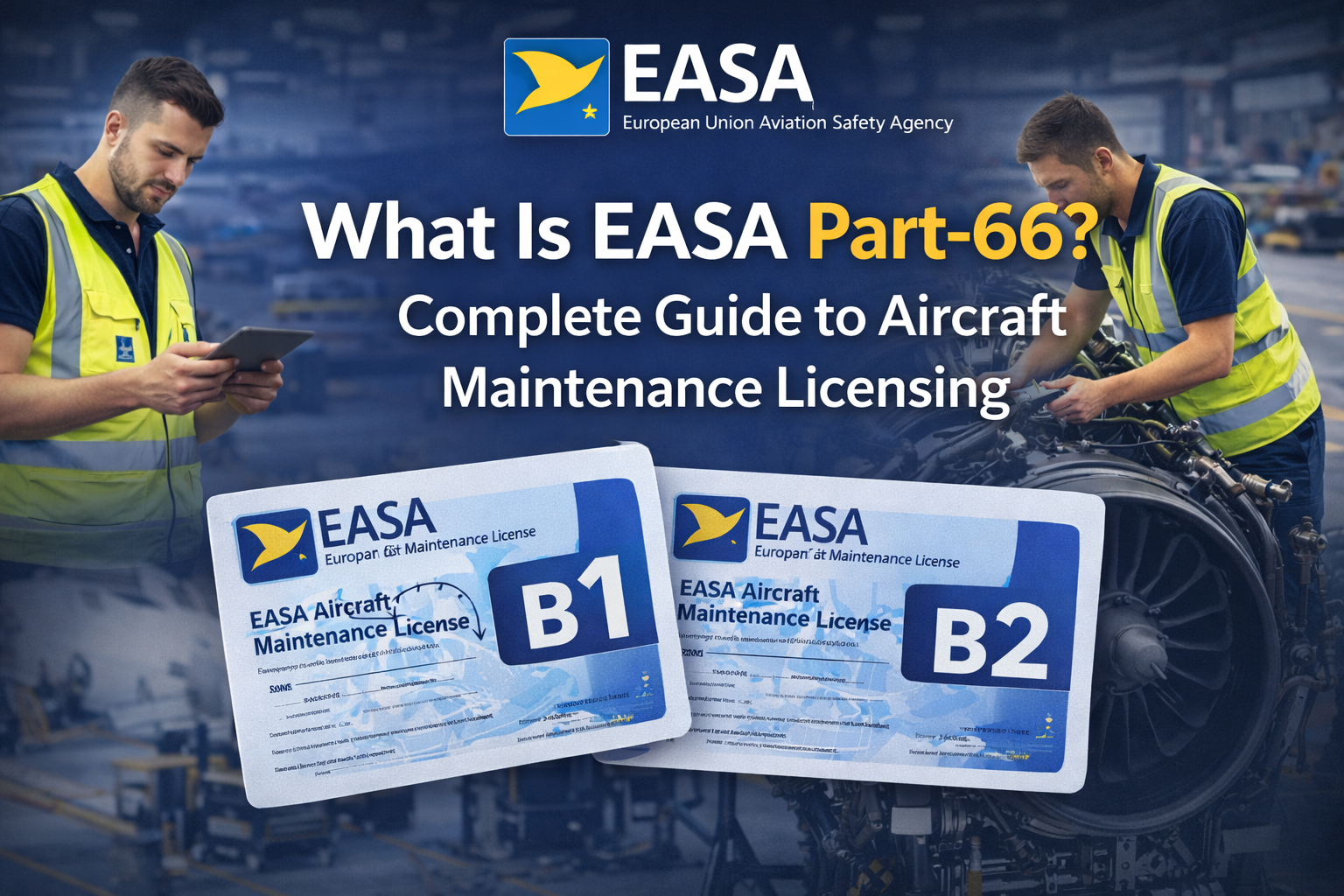
What Is EASA Part-66? Complete Guide to Aircraft Maintenance Licensing
If you are planning a career in aircraft maintenance engineering, understanding EASA Part-66 is essential. Under the easa regulatory framework, Part-66 defines the licensing requirements for aircraft maintenance engineers across Europe and in many countries worldwide that recognize easa standards.
In this comprehensive guide, you will learn:
-
What EASA Part-66 is
-
Why easa licensing is important
-
License categories (A, B1, B2, B3)
-
Modules de la PART 66
-
Part – 66 Basic Examination structure
-
How EASA Part-147 training supports Part-66
-
EASA Part 66 Training Morocco opportunities
-
Career benefits of a Part 66 License
What Is EASA?
The European Union Aviation Safety Agency (easa) is responsible for aviation safety regulation within the European Union. It sets rules for:
-
Aircraft certification
-
Maintenance standards
-
Continuing airworthiness
-
Training and licensing of aircraft maintenance engineers
EASA ensures that aircraft operating within its jurisdiction meet strict safety requirements.
What Is EASA Part-66?
EASA Part-66 is the regulation that defines the requirements for issuing aircraft maintenance licenses. It specifies:
-
Theoretical knowledge standards
-
Required maintenance experience
-
Examination requirements
-
License privileges and limitations
A Part-66 license allows an engineer to certify that aircraft maintenance has been performed correctly and that the aircraft is safe for release to service.
In simple terms:
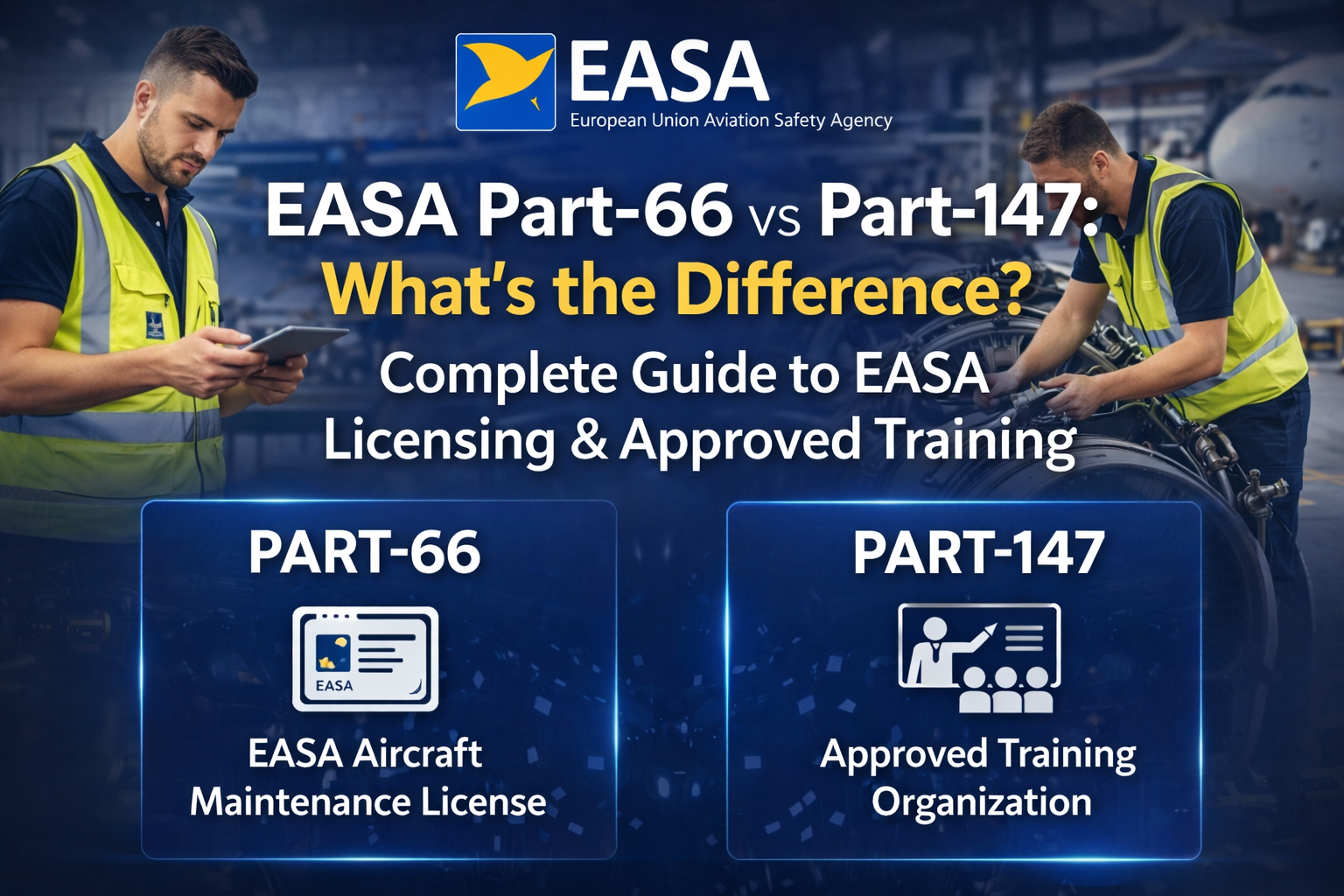
EASA Part-66 = Aircraft Maintenance Engineer License Regulation
Why Is EASA Part-66 Important?
EASA Part-66 ensures:
-
Standardized qualification across Europe
-
High safety standards in aircraft maintenance
-
International recognition of maintenance engineers
-
Consistency in technical competence
Many countries outside Europe also recognize easa licenses due to their strict safety standards.
EASA Part-66 License Categories
The easa Part-66 license includes different categories depending on specialization.
Category A
-
Minor maintenance tasks
-
Limited certification privileges
Category B1 (Mechanical)
-
Aircraft structures
-
Engines
-
Mechanical systems
-
Hydraulics
-
Fuel systems
Category B2 (Avionics)
-
Electrical systems
-
Navigation systems
-
Communication systems
-
Instrument systems
Category B3
-
Light piston-engine aircraft
Each category requires completion of specific modules and practical experience.
Modules de la PART 66
The knowledge requirement under easa is divided into structured modules.
Core modules include:
-
M1 – Mathematics
-
M2 – Physics
-
M3 – Electrical Fundamentals
-
M4 – Electronic Fundamentals
-
M5 – Digital Techniques / Electronic Instrument Systems
-
M6 – Materials and Hardware
-
M7 – Maintenance Practices
-
M8 – Basic Aerodynamics
-
M9 – Human Factors
-
M10 – Aviation Legislation
-
M11 – Turbine Aeroplane Aerodynamics, Structures and Systems
-
M13 – Aircraft Aerodynamics, Structures and Systems
-
M14 – Propulsion
-
M15 – Gas Turbine Engine
-
M17 – Propeller
Each module must be passed in the Part – 66 Basic Examination.
Part – 66 Basic Examination
The Part-66 Basic Examination is mandatory to obtain the license.
It includes:
-
Multiple Choice Questions (MCQs)
-
Essay questions (for certain modules like M7)
-
Minimum passing score (typically 75%)
-
Separate exams for each module
Candidates must pass all required modules for their chosen license category.
Experience Requirements Under EASA Part-66
In addition to examinations, easa requires:
-
Documented maintenance experience
-
Practical training
-
Logbook verification
-
Experience duration depending on educational background
Without practical experience, a license cannot be issued.
What Is EASA Part-147 and How Does It Relate to Part-66?
While Part-66 regulates licensing, EASA Part-147 regulates training organizations.
An EASA Part-147 Approved school provides:
-
Part 66 BASIC Course
-
Module training
-
Exam preparation
-
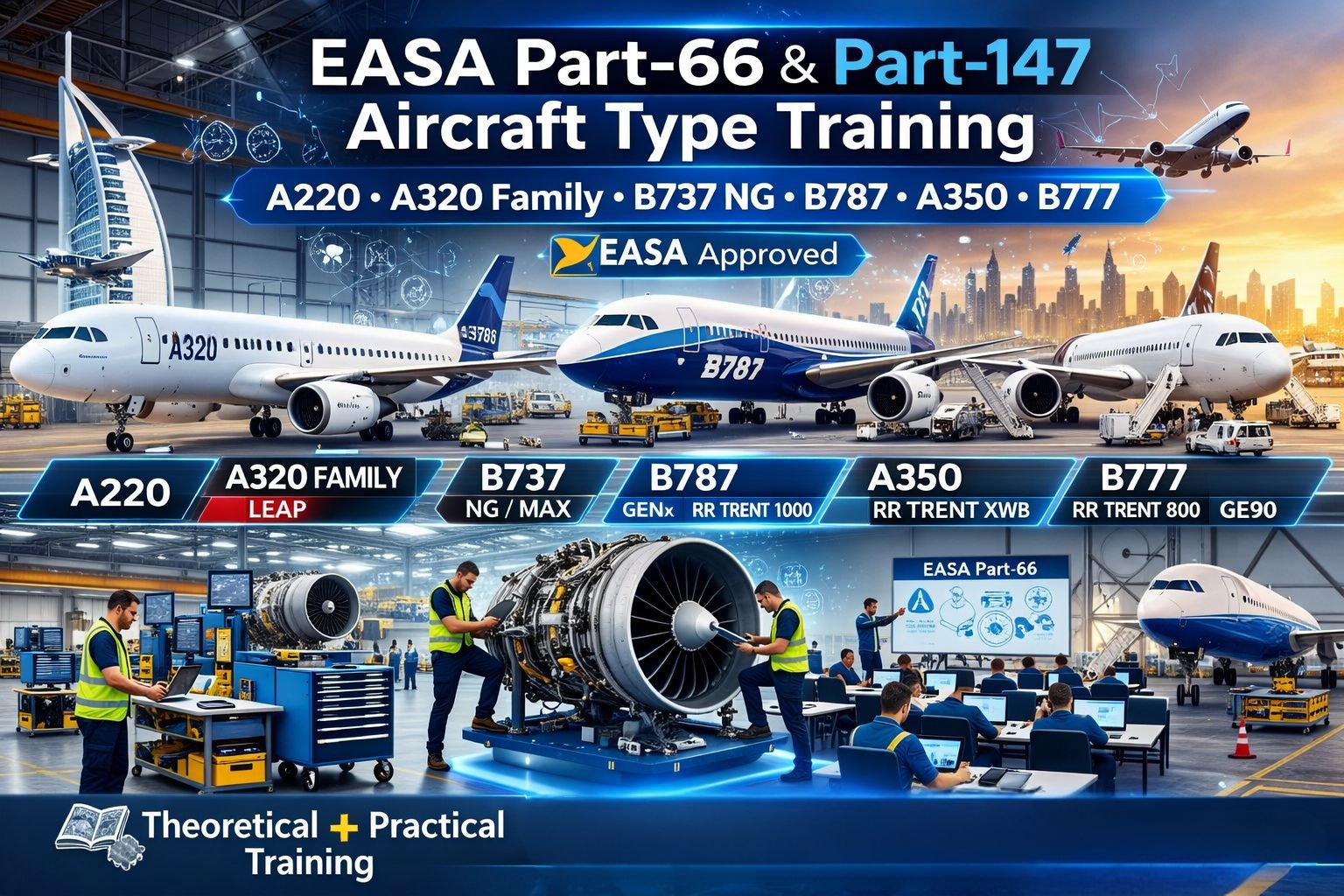
Type training
-
Certificate of Recognition
In short:
-
Part-147 prepares you
-
Part-66 licenses you
Together, they form the complete easa training pathway.
How to Get a Part 66 License – EASA Part 66 / 147 Training & Exams
Here is the step-by-step process:
-
Enroll in an EASA Part-147 Approved training center
-
Complete the Part 66 BASIC Course
-
Study required Modules de la PART 66
-
Pass all Part – 66 Basic Examinations
-
Gain required practical experience
-
Apply to aviation authority for your Part 66 License
EASA Part 66 Training Morocco
Morocco is emerging as a recognized destination for EASA Part 66 Training Morocco.
Benefits include:
-
Part-147 Approved organizations
-
International instructor expertise
-
Modern facilities
-
Competitive training costs
-
Access to Airbus and Boeing fleets
Training under easa standards in Morocco provides international career opportunities.
Career Opportunities After EASA Part-66
Holding a Part-66 license allows you to work as:
-
Aircraft Maintenance Engineer
-
Line Maintenance Technician
-
Base Maintenance Engineer
-
Avionics Specialist
-
MRO Technician
The license is recognized across Europe and widely accepted internationally.
Frequently Asked Questions
What is EASA Part-66?
EASA Part-66 is the regulation that defines the requirements for aircraft maintenance engineer licensing under easa standards.
Is EASA Part-66 recognized worldwide?
Yes. Many countries recognize easa licenses due to strict safety standards.
How many modules are required for Part-66?
There are multiple modules depending on your category, including mathematics, physics, maintenance practices, legislation, engines, and avionics systems.
What is the difference between Part-66 and Part-147?
Part-66 regulates licensing, while Part-147 regulates approved training organizations.
Conclusion
EASA Part-66 is the foundation of aircraft maintenance licensing in Europe. It ensures that engineers meet strict knowledge and experience requirements before being authorized to certify aircraft maintenance.
Combined with EASA Part-147 training, it creates a structured and internationally respected pathway for aircraft maintenance professionals.
If you are serious about building a global aviation career, following the easa Part-66 licensing pathway is the first and most important step.