Safeskey Solution

Safeskey Solution

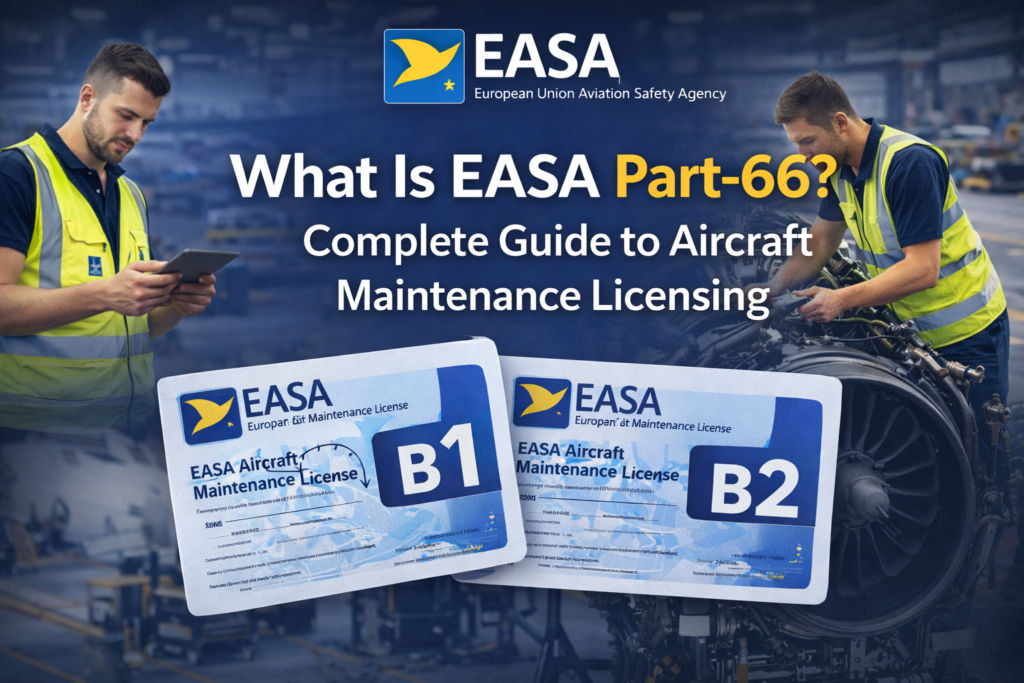
What Is EASA Part-66? Complete Guide to Aircraft Maintenance Licensing

What Is EASA Part-66? Complete Guide to Aircraft Maintenance Licensing If you are planning a career in aircraft maintenance engineering, understanding EASA Part-66 is essential. Under the easa regulatory framework, Part-66 defines the licensing requirements for aircraft maintenance engineers across Europe and in many countries worldwide that recognize easa standards. In this comprehensive guide, you will learn: What EASA Part-66 is Why easa licensing is important License categories (A, B1, B2, B3) Modules de la PART 66 Part – 66 Basic Examination structure How EASA Part-147 training supports Part-66 EASA Part 66 Training Morocco opportunities Career benefits of a Part 66 License What Is EASA? The European Union Aviation Safety Agency (easa) is responsible for aviation safety regulation within the European Union. It sets rules for: Aircraft certification Maintenance standards Continuing airworthiness Training and licensing of aircraft maintenance engineers EASA ensures that aircraft operating within its jurisdiction meet strict safety requirements. What Is EASA Part-66? EASA Part-66 is the regulation that defines the requirements for issuing aircraft maintenance licenses. It specifies: Theoretical knowledge standards Required maintenance experience Examination requirements License privileges and limitations A Part-66 license allows an engineer to certify that aircraft maintenance has been performed correctly and that the aircraft is safe for release to service. In simple terms: EASA Part-66 = Aircraft Maintenance Engineer License Regulation Why Is EASA Part-66 Important? EASA Part-66 ensures: Standardized qualification across Europe High safety standards in aircraft maintenance International recognition of maintenance engineers Consistency in technical competence Many countries outside Europe also recognize easa licenses due to their strict safety standards. EASA Part-66 License Categories The easa Part-66 license includes different categories depending on specialization. Category A Minor maintenance tasks Limited certification privileges Category B1 (Mechanical) Aircraft structures Engines Mechanical systems Hydraulics Fuel systems Category B2 (Avionics) Electrical systems Navigation systems Communication systems Instrument systems Category B3 Light piston-engine aircraft Each category requires completion of specific modules and practical experience. Modules de la PART 66 The knowledge requirement under easa is divided into structured modules. Core modules include: M1 – Mathematics M2 – Physics M3 – Electrical Fundamentals M4 – Electronic Fundamentals M5 – Digital Techniques / Electronic Instrument Systems M6 – Materials and Hardware M7 – Maintenance Practices M8 – Basic Aerodynamics M9 – Human Factors M10 – Aviation Legislation M11 – Turbine Aeroplane Aerodynamics, Structures and Systems M13 – Aircraft Aerodynamics, Structures and Systems M14 – Propulsion M15 – Gas Turbine Engine M17 – Propeller Each module must be passed in the Part – 66 Basic Examination. Part – 66 Basic Examination The Part-66 Basic Examination is mandatory to obtain the license. It includes: Multiple Choice Questions (MCQs) Essay questions (for certain modules like M7) Minimum passing score (typically 75%) Separate exams for each module Candidates must pass all required modules for their chosen license category. Experience Requirements Under EASA Part-66 In addition to examinations, easa requires: Documented maintenance experience Practical training Logbook verification Experience duration depending on educational background Without practical experience, a license cannot be issued. What Is EASA Part-147 and How Does It Relate to Part-66? While Part-66 regulates licensing, EASA Part-147 regulates training organizations. An EASA Part-147 Approved school provides: Part 66 BASIC Course Module training Exam preparation Type training Certificate of Recognition In short: Part-147 prepares you Part-66 licenses you Together, they form the complete easa training pathway. How to Get a Part 66 License – EASA Part 66 / 147 Training & Exams Here is the step-by-step process: Enroll in an EASA Part-147 Approved training center Complete the Part 66 BASIC Course Study required Modules de la PART 66 Pass all Part – 66 Basic Examinations Gain required practical experience Apply to aviation authority for your Part 66 License EASA Part 66 Training Morocco Morocco is emerging as a recognized destination for EASA Part 66 Training Morocco. Benefits include: Part-147 Approved organizations International instructor expertise Modern facilities Competitive training costs Access to Airbus and Boeing fleets Training under easa standards in Morocco provides international career opportunities. Career Opportunities After EASA Part-66 Holding a Part-66 license allows you to work as: Aircraft Maintenance Engineer Line Maintenance Technician Base Maintenance Engineer Avionics Specialist MRO Technician The license is recognized across Europe and widely accepted internationally. Frequently Asked Questions  What is EASA Part-66? EASA Part-66 is the regulation that defines the requirements for aircraft maintenance engineer licensing under easa standards. Is EASA Part-66 recognized worldwide? Yes. Many countries recognize easa licenses due to strict safety standards. How many modules are required for Part-66? There are multiple modules depending on your category, including mathematics, physics, maintenance practices, legislation, engines, and avionics systems. What is the difference between Part-66 and Part-147? Part-66 regulates licensing, while Part-147 regulates approved training organizations. Conclusion EASA Part-66 is the foundation of aircraft maintenance licensing in Europe. It ensures that engineers meet strict knowledge and experience requirements before being authorized to certify aircraft maintenance. Combined with EASA Part-147 training, it creates a structured and internationally respected pathway for aircraft maintenance professionals. If you are serious about building a global aviation career, following the easa Part-66 licensing pathway is the first and most important step.

What Is EASA Part-66? Complete Guide to Aircraft Maintenance Licensing Read Post »
Safeskey Solution

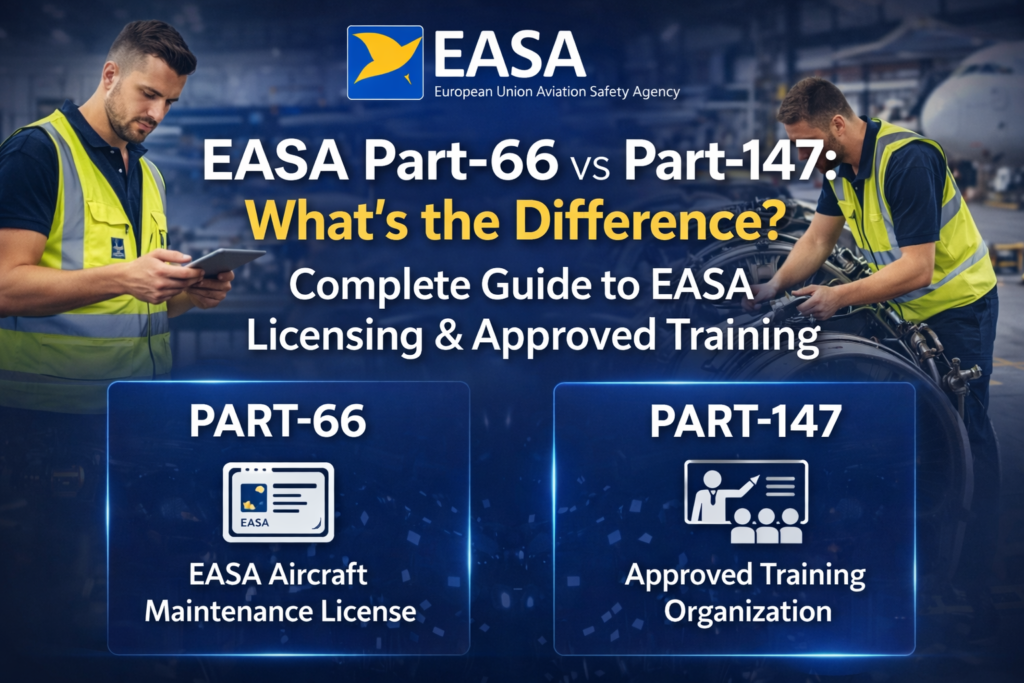
EASA Part-66 vs Part-147: What’s the Difference? Complete Guide to EASA Licensing & Approved Training

EASA Part-66 vs Part-147: What’s the Difference? The aviation industry operates under strict regulatory standards to ensure aircraft safety and maintenance excellence. Within the European aviation system, the two most important frameworks governing aircraft maintenance engineers are EASA Part-66 and EASA Part-147. Understanding the difference between these two easa regulations is essential if you plan to obtain a Part 66 License – EASA Part 66 / 147 Training & Exams or enroll in an EASA Part-147 Approved Type Course. This guide explains everything in detail. What Is EASA?   The European Union Aviation Safety Agency (easa) is the authority responsible for civil aviation safety across Europe. EASA sets the rules for: Aircraft certification Maintenance standards Continuing airworthiness Training and licensing of maintenance personnel Two of its most important regulations are: EASA Part-66 (Licensing of Aircraft Maintenance Engineers) EASA Part-147 (Approval of Maintenance Training Organizations) What Is EASA Part-66?   EASA Part-66 defines the requirements to obtain an aircraft maintenance license. It ensures that engineers have: Theoretical knowledge Practical skills Documented maintenance experience Regulatory understanding To obtain the license, candidates must complete: Required Modules de la PART 66 Pass thePart – 66 Basic Examination Gain approved maintenance experience The Part-66 license categories include: Category A Category B1 (Mechanical) Category B2 (Avionics) Category B3 (Light Aircraft) Correct Modules de la PART 66 (Aligned With Your System)   Below are the core easa Part-66 modules visible in your platform: M1 – Mathematics (B1/B2) Engineering mathematics used in aircraft calculations. M2 – Physics (B1/B2) Fundamental aviation physics principles. M3 – Electrical Fundamentals (B1/B2) Electrical circuits and theory. M4 – Electronic Fundamentals M4.1 (B1) M4 (B2) M5 – Digital Techniques / Electronic Instrument Systems M5.B1 M5 (B2) M6 – Materials and Hardware M6 (B1) M6.B2 (B2) M7 – Maintenance Practices M7 (B1) M7.B2 M7 (ESSAYS) M8 – Basic Aerodynamics (B1/B2)M9 – Human Factors (B1/B2)M10 – Aviation Legislation (B1/B2)M11 – Turbine Aeroplane Aerodynamics, Structures and Systems (B1)M13 – Aircraft Aerodynamics, Structures and Systems (B2)M14 – Propulsion (B2)M15 – Gas Turbine Engine (B1)M17 – Propeller (B1) These modules form the knowledge foundation required under easa regulation. What Is EASA Part-147? While Part-66 regulates individual licensing, EASA Part-147 regulates training organizations. An EASA Part-147 Approved organization is authorized to deliver: Part 66 BASIC Course Aircraft Type Training B1/B2 Theoretical and Practical Training Differences Training Certificate of Recognition Part-66 Examination (when approved) EASA Part-147 Approved Type Courses Your website clearly shows multiple EASA Part-147 Approved Type Courses, including: Airbus Type Courses Airbus A318 / A319 / A320 / A321 (CFM56) Airbus A319 / A320 / A321 (CFM LEAP-1A) Airbus A350 (Trent XWB) Boeing Type Courses Boeing 737-600/700/800/900 Boeing 737 MAX Boeing 777-200/300 Boeing 787-8/9/10 Boeing 767 Boeing 757 ATR Type Courses ATR 42-400 / 500 / 72-212A Embraer Type Courses Embraer ERJ-190 Series These courses are typically: B1/B2 Theoretical & Practical Delivered under easa Part-147 approval Concluding with a Certificate of Recognition This certificate is required to add a type rating to your Part 66 License. Difference Between EASA Part-66 and Part-147 Feature EASA Part-66 EASA Part-147 Governs Individual license Training organization Focus Licensing requirements Training & quality system Exams Part – 66 Basic Examination Conducts approved training Outcome Aircraft Maintenance License Certificate of Recognition In simple terms: Part-147 trains you. Part-66 licenses you. EASA Part-147 & Part-66 Maintenance Training Pathway Here is the complete pathway: Enroll in an EASA Part-147 Approved school Complete the Part 66 BASIC Course Study and pass all required Modules de la PART 66 Pass the Part – 66 Basic Examination Gain required practical maintenance experience Apply for your Part 66 License Complete Aircraft Type Training (Part-147) Add Type Rating to your license This structured process ensures compliance with easa safety standards. EASA Part 66 Training Morocco Morocco is becoming a recognized hub for EASA Part 66 Training Morocco, offering: Part-147 Approved programs Modern training facilities Type training on Airbus, Boeing, ATR, Embraer Competitive pricing International certification recognition This makes Morocco an attractive option for engineers seeking easa-compliant training. Why EASA Certification Matters Holding an easa license provides: Global Recognition Accepted across Europe and many international aviation markets. Higher Salary Potential Licensed B1/B2 engineers are in high demand. International Mobility Work in Europe, Middle East, Africa, and Asia. Professional Authority Sign off aircraft as airworthy. FAQs:   What is the difference between EASA Part-66 and Part-147? EASA Part-66 regulates aircraft maintenance licensing, while Part-147 regulates approved training organizations delivering maintenance courses. What is an EASA Part-147 Approved Type Course? It is aircraft-specific training (Airbus, Boeing, ATR, etc.) delivered by an easa-approved organization, allowing engineers to add a type rating to their Part-66 license. Is EASA Part 66 Training Morocco recognized internationally? Yes. If delivered by an easa Part-147 approved organization, it is internationally recognized. Do I need Part-147 training to get a Part-66 license? Yes. Training through an approved Part-147 organization is required to complete your Part 66 BASIC Course and examinations. Conclusion Understanding the difference between EASA Part-66 and EASA Part-147 is critical for anyone entering the aircraft maintenance profession. Part-66 defines the licensing framework. Part-147 defines the approved training structure. Together, they create a complete pathway for: Part 66 License – EASA Part 66 / 147 Training & Exams Aircraft Type Ratings Global aviation career opportunities If you are planning your aviation career, choosing an EASA Part-147 Approved training organization is the first essential step toward earning your easa license and building a successful future in aircraft maintenance.

EASA Part-66 vs Part-147: What’s the Difference? Complete Guide to EASA Licensing & Approved Training Read Post »

Safeskey Solution

EASA Part-147 Aircraft Type Training: A320, B787, A350 & B777 Demand in 2026

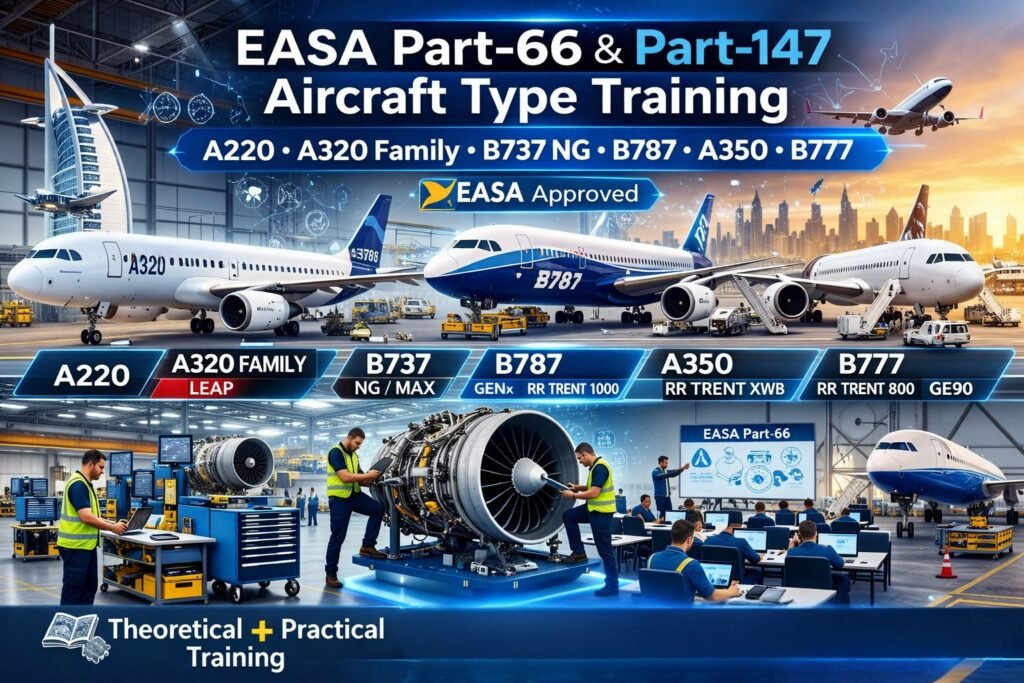
The global aviation industry continues to expand, driving strong demand for EASA Part-147 approved training organizations delivering aircraft type rating courses. As airlines grow their fleets and introduce next-generation aircraft, licensed aircraft engineers must stay current through specialized training programs. From the A220 and A320 Family to the B737 NG, Boeing 787 both engine programs, Airbus A350, and Boeing 777 training in the UAE, aircraft type courses are essential for career progression and regulatory compliance. This article explores the latest aircraft type training demand, EASA Part-66 examination structure updates, and the most in-demand programs worldwide. Understanding EASA Part-147 Approved Training Organizations EASA Part-147 approved training organizations are authorized institutions that provide aircraft type training and conduct theoretical examinations in accordance with European Union Aviation Safety Agency regulations. These organizations deliver: Aircraft type theoretical courses Practical training programs On-the-Job Training (OJT) EASA Part-66 examinations Engine-specific aircraft programs Training under Part-147 ensures engineers meet the certification standards required for license endorsement under EASA Part-66. EASA Part-66 Examination Structure Updates Recent EASA Part-66 examination structure updates reflect advancements in aircraft systems, composite materials, and modern engine technologies. Key elements include: Competency-based assessments Modular examination structure Enhanced practical evaluation standards Alignment with advanced aircraft such as A350 and B787 Engineers must complete: Module examinations Type course theoretical examinations Practical training assessments These updates ensure engineers are fully prepared to maintain next-generation aircraft safely and efficiently. Latest Aircraft Type Training Demand (A320, B787, A350, B777) Airline fleet expansion has created strong demand for specific aircraft type ratings. Airbus A320 Family Training The A320 Family remains the most in-demand narrow-body aircraft worldwide. Engine options include: CFM56 V2500 LEAP-1A PW Only Popular programs include: A320 – CFM56 + V2500 A320 – CFM56 + V2500 + LEAP A320 – All Engines (CFM56 + V2500 + LEAP-1A + PW) Airbus A320 LEAP With many airlines transitioning to fuel-efficient fleets, A320 LEAP training continues to grow rapidly. Boeing 787 Both Engine Programs The Boeing 787-8/9/10 is powered by: GEnx RR Trent 1000 Many engineers complete B787 – GEnx + RR Trent 1000 combined programs to maximize employment opportunities. B787 training demand is particularly strong in long-haul markets across the Middle East, Europe, and Asia. Airbus A350 Training The Airbus A350 powered by RR Trent XWB represents advanced composite airframe technology and modern avionics systems. As global carriers expand long-haul routes, A350 type training demand continues to increase significantly. Boeing 777 Training The Boeing 777-200/300 remains one of the most widely operated wide-body aircraft globally. Engine options include: GE90 RR Trent 800 Demand for Boeing 777 training UAE programs is especially high due to the region’s large wide-body fleets and cargo operations. Boeing 777 Training in the UAE The UAE is a major aviation hub, making Boeing 777 training in the UAE highly sought after. Benefits include: Access to major airline fleets Modern MRO facilities Wide-body practical exposure International regulatory recognition Popular programs: Boeing 777-200/300 (RR Trent 800) Boeing 777 GE90 Practical training modules Theoretical examinations A220, A320 Family, B737 NG, B787 Both Engine Programs Leading EASA Part-147 organizations offer comprehensive aircraft portfolios. ATR 42 / 72 PW127 XT PW127N Airbus A220 New-generation regional jet program Airbus A320 Family CFM56 V2500 LEAP-1A PW Only Airbus A350 RR Trent XWB Boeing 737 NG CFM56 (NG) Boeing 737 MAX LEAP-1B (MAX) Boeing 777 GE90 RR Trent 800 Boeing 787 GEnx RR Trent 1000 These structured programs provide engineers with flexibility across multiple fleets and engine combinations. Practical Training and Theoretical Examinations Aircraft type training includes two core components: Theoretical Phase Aircraft systems Limitations Maintenance practices Troubleshooting Human factors Practical Training Phase Aircraft inspections Component replacement Engine ground handling System functional checks Successful completion allows aircraft type endorsement under EASA Part-66. Boeing 747 and Legacy Wide-Body Programs Although newer aircraft dominate demand, Boeing 747 training remains relevant for cargo operations and specialized fleets. Engineers certified on legacy wide-body aircraft continue to find opportunities in freight and charter sectors. Why Aircraft Type Courses Are Critical in 2026 With increasing global air traffic and fleet modernization, engineers certified on: A220 A320 Family B737 NG Boeing 787 both engine programs Airbus A350 Boeing 777 are positioned for long-term career growth. Engine specialization in LEAP, GEnx, Trent 1000, Trent 800, GE90, and Trent XWB significantly enhances employability. Conclusion The aviation maintenance sector continues to evolve, and demand for EASA Part-147 approved training organizations remains strong worldwide. With rising fleet numbers of A320, B787, A350, and Boeing 777 aircraft, engineers must invest in advanced type courses and practical training programs. Whether pursuing Boeing 777 training in the UAE, enrolling in A220, A320 Family, B737 NG, or B787 both engine programs, or completing updated EASA Part-66 examinations, specialized training is the foundation of a successful aviation maintenance career.

EASA Part-147 Aircraft Type Training: A320, B787, A350 & B777 Demand in 2026 Read Post »

Safeskey Solution

EASA Part-66 & Part-147 Training in Dubai and Morocco: Your Complete Guide to Aircraft Maintenance Certification

In an age where aviation continues to grow as one of the world’s most dynamic industries, securing a high‑quality, internationally recognized qualification is more important than ever. SafeSky’s EASA Training Programs are designed to do just that — empower students from around the globe to build rewarding careers in aircraft maintenance, aerospace operations, and technical aviation fields. From strategic training hubs in Casablanca and Dubai, SafeSky Solution Academy delivers industry‑leading education that aligns with EASA (European Union Aviation Safety Agency) standards — the global benchmark for aviation safety and technical excellence. What Is EASA and Why It Matters The European Union Aviation Safety Agency (EASA) sets the highest regulatory standards for aviation safety, maintenance, and technical training across Europe and beyond. EASA‑approved training programs are globally recognized, opening international opportunities in airlines, maintenance organizations (MROs), aviation authorities, and aerospace engineering firms. For aviation professionals, an EASA certification validates skills, enhances credibility, and accelerates career mobility worldwide. Why Employers Value EASA Training Training Programs That Launch Careers SafeSky Solution Academy offers a range of programs tailored for both new learners and experienced technicians: EASA Part‑147 Aircraft Maintenance Courses Designed to prepare candidates for official EASA exams and licensing, these courses focus on: Airframe and systems  Avionics and powerplant fundamentals Regulatory compliance and safety standards Technical Workshops & Labs Hands‑on exercises and simulation labs deepen understanding of complex aviation systems. Career Development Seminars Interactive coaching on resumes, interview readiness, and global employer expectations. Why Employers Value EASA Training Aviation employers around the world — from major airlines to precision MRO facilities — prefer candidates who have undergone EASA‑approved education because: A supportive learning environment Highly knowledgeable instructors with real industry experience Increased confidence entering the global aviation job market Strategically Positioned for the Future SafeSky’s global locations are not accidental.📍 Casablanca connects Africa to Europe and beyond, while📍 Dubai offers access to one of the busiest aviation markets in the world. Together, these hubs help students access opportunities on every continent. Gallery SAFESKEY SOLUTION Your Aviation Career Starts Here The future of flight belongs to those who are ready to learn, adapt, and lead. With SafeSky’s EASA‑aligned training programs, you’re not just earning qualifications — you’re joining a global network of aviation professionals equipped to face tomorrow’s challenges. Whether you’re aiming to maintain aircraft, advance into technical leadership, or explore aerospace innovation, SafeSky’s EASA training puts you on the runway to success.

EASA Part-66 & Part-147 Training in Dubai and Morocco: Your Complete Guide to Aircraft Maintenance Certification Read Post »

Safeskey Solution

Empowering Global Aviation Careers with SafeSky’s EASA Training

In an age where aviation continues to grow as one of the world’s most dynamic industries, securing a high‑quality, internationally recognized qualification is more important than ever. SafeSky’s EASA Training Programs are designed to do just that — empower students from around the globe to build rewarding careers in aircraft maintenance, aerospace operations, and technical aviation fields. From strategic training hubs in Casablanca and Dubai, SafeSky Solution Academy delivers industry‑leading education that aligns with EASA (European Union Aviation Safety Agency) standards — the global benchmark for aviation safety and technical excellence. What Is EASA and Why It Matters The European Union Aviation Safety Agency (EASA) sets the highest regulatory standards for aviation safety, maintenance, and technical training across Europe and beyond. EASA‑approved training programs are globally recognized, opening international opportunities in airlines, maintenance organizations (MROs), aviation authorities, and aerospace engineering firms. For aviation professionals, an EASA certification validates skills, enhances credibility, and accelerates career mobility worldwide. Why Employers Value EASA Training Training Programs That Launch Careers SafeSky Solution Academy offers a range of programs tailored for both new learners and experienced technicians: EASA Part‑147 Aircraft Maintenance Courses Designed to prepare candidates for official EASA exams and licensing, these courses focus on: Airframe and systems  Avionics and powerplant fundamentals Regulatory compliance and safety standards Technical Workshops & Labs Hands‑on exercises and simulation labs deepen understanding of complex aviation systems. Career Development Seminars Interactive coaching on resumes, interview readiness, and global employer expectations. Why Employers Value EASA Training Aviation employers around the world — from major airlines to precision MRO facilities — prefer candidates who have undergone EASA‑approved education because: A supportive learning environment Highly knowledgeable instructors with real industry experience Increased confidence entering the global aviation job market Strategically Positioned for the Future SafeSky’s global locations are not accidental.📍 Casablanca connects Africa to Europe and beyond, while📍 Dubai offers access to one of the busiest aviation markets in the world. Together, these hubs help students access opportunities on every continent. Gallery SAFESKEY SOLUTION Your Aviation Career Starts Here The future of flight belongs to those who are ready to learn, adapt, and lead. With SafeSky’s EASA‑aligned training programs, you’re not just earning qualifications — you’re joining a global network of aviation professionals equipped to face tomorrow’s challenges. Whether you’re aiming to maintain aircraft, advance into technical leadership, or explore aerospace innovation, SafeSky’s EASA training puts you on the runway to success.

Empowering Global Aviation Careers with SafeSky’s EASA Training Read Post »

Safeskey Solution

EASA Part-147 Excellence: Inside SafeSky Solution Academy’s World-Class Programs

In today’s competitive aviation industry, obtaining EASA‑approved training is one of the most impactful ways to launch or advance your career — whether you are a future aircraft maintenance engineer or aviation professional. One standout provider making waves in this space is the EASA Academy SafeSky Solution — a certified training hub dedicated to excellence and global compliance. What Is EASA and Why Its Certification Matters The European Union Aviation Safety Agency (EASA) is the premier aviation safety regulator in Europe, setting stringent standards to ensure air operations are efficient, safe, and globally recognized. EASA EASA certifications — especially Part‑147 (Maintenance Training Organisation approval) — signify that a training provider meets internationally recognized curricula and regulatory benchmarks for theory, practice, and examinations. Graduates from these programs are highly sought after in the global aviation job market. About SafeSky Solution – EASA Academy Training Hub SafeSky Solution (often branded as SafeSky Academy) is a comprehensive aviation training and management platform focused on empowering students and professionals with the skills needed to stand out in the global aviation industry. Safesky Academy Based in Casablanca, Morocco, SafeSky Solution functions as an approved EASA Part‑147 training organization (Reference EASA.147.0220) — meaning it is authorized to deliver specific theoretical and practical maintenance training and issue EASA‑recognized certificates. This accreditation shows adherence to EASA Regulation (EU) No 1321/2014 standards — the benchmark for international aircraft maintenance certification. EASA certifications — especially Part‑147 (Maintenance Training Organisation approval) — signify that a training provider meets internationally recognized curricula and regulatory benchmarks for theory, practice, and examinations. Graduates from these programs are highly sought after in the global aviation job market. Core Programs and Specialized Training Offerings 1. EASA Part‑147 Maintenance Training SafeSky Solution’s Part‑147 approval allows it to deliver world‑class maintenance training for multiple aircraft systems and models. This includes: Airbus A318/A319/A320/A321 systems Boeing aircraft series Embraer regional jets Both theoretical instruction and hands‑on practical coursework These programs prepare students for real‑world aviation maintenance roles and future EASA licensing exams. 2. Aviation Career Preparation & Management Tools SafeSky Academy isn’t just about certifications — it also serves as a comprehensive learning management system to help aviation students, cabin crew trainees, and ground personnel streamline their training journey and career development. Safesky Academy This includes online lesson tracking, resource libraries, and career support — all designed to help learners study harder, fly safer, and aim higher. Why Choose EASA Academy SafeSky Solution Internationally Recognized Certification Graduates from EASA Part‑147 programs carry credentials that are recognized across borders and highly valued by airlines, MROs (Maintenance, Repair & Overhaul) facilities, and aviation employers worldwide. Practical Experience Meets Regulatory Standards SafeSky Solution blends hands‑on technical instruction with theory aligned to current EASA regulatory frameworks — ensuring comprehensive competence in aircraft maintenance fundamentals. Strong Local Presence with Global Reach Located strategically in Casablanca and Dubai, the training center supports both local and international students, reducing barriers to quality EASA‑aligned training across North Africa and the Middle East. What Learners Can Expect From SafeSky Structured EASA‑Compliant Curriculum — Designed to match EASA Part‑147 syllabus requirements.Practical Workshops & Simulation Labs — Hands‑on experience with real aircraft components.Career‑Focused Support — Training plus career guidance for aviation professionals.Globally Recognized Certificates — Credentials that help graduates compete internationally. Who Should Consider SafeSky Academy Training SafeSky Solution welcomes a range of aviation aspirants, including: Aspiring Aircraft Maintenance Technicians Current Technicians Seeking EASA Upgrade Students New to Aviation Maintenance Professionals Targeting International Aerospace Jobs Because of its EASA accreditation, employers often view Part‑147 graduates as forward‑ready candidates for roles in airlines, MRO shops, and aviation authorities worldwide. Gallery SAFESKEY SOLUTION Conclusion: Realize Your Aviation Career Goals With SafeSky In an industry built on precision, safety, and regulatory compliance, obtaining EASA‑approved training is often the key to unlocking global opportunities. The EASA Academy SafeSky Solution offers a blend of regulatory credibility, structured learning, and practical skill‑building — making it a go‑to choice for aviation students and professionals seeking real impact. Whether you aim to maintain aircraft, pursue licensing, or grow as a trained aviation specialist, SafeSky provides a complete pathway rooted in international standards and future‑ready training.

EASA Part-147 Excellence: Inside SafeSky Solution Academy’s World-Class Programs Read Post »

Safesky Solutions is an aviation training center specializing in aircraft maintenance technician education and EASA-aligned programs.

Legal & Support

Company

© 2026 Safesky Solution Academy

Safesky Solutions is an aviation training center specializing in aircraft maintenance technician education and EASA-aligned programs.

Legal & Support

Company

© 2026 Safesky Solution Academy

Scroll to Top